
Neck pain at home can often be managed with simple changes to daily habits, gentle movement, and appropriate self-care. Whether discomfort is related to prolonged screen time, poor posture, muscle tension, or an awkward sleeping position, understanding how to care for your neck can help support comfort and mobility. If your symptoms are ongoing, becoming more intense, or affecting your daily activities, consider seeking advice from a qualified healthcare professional.
Neck Pain at Home: Understanding the Common Causes
Neck pain can develop for many reasons. Identifying possible triggers can help you choose suitable strategies for managing discomfort.
Poor Posture and Screen Use
Spending long periods looking down at a phone or working at a computer can place additional stress on the muscles and joints around the neck. Maintaining the same position for extended periods may contribute to stiffness and discomfort.
Muscle Tension
Stress, repetitive activities, and prolonged sitting can cause the neck and shoulder muscles to become tense. Gentle movement and regular breaks may help reduce muscle tightness.
Sleeping Position
An unsuitable pillow or sleeping position can leave the neck in an uncomfortable position for several hours. A supportive pillow that keeps your head and neck aligned may help reduce morning stiffness.
Neck Pain Relief at Home
There are several simple approaches that may support neck pain relief at home. The right option depends on the cause and severity of your symptoms.
Apply Heat or Cold
A cold pack may be useful during the early stages of discomfort, while gentle heat can help relax tense muscles. Always wrap hot or cold packs in a cloth and avoid applying them directly to the skin.

Take Regular Movement Breaks
If your work involves sitting for long periods, stand up and move around regularly. Changing positions can reduce prolonged strain on the neck and upper back.
Improve Your Sitting Position
Keep your computer screen close to eye level and avoid repeatedly bending your neck toward the screen. Your shoulders should remain relaxed, and your feet should be comfortably supported.
Adjust Your Workspace
A well-arranged workstation can make everyday activities more comfortable. Position your monitor so that you do not need to constantly look downward or twist your neck.
How to Relieve Neck Pain at Home With Gentle Exercises
Gentle movement can be useful when stiffness is related to prolonged inactivity or muscle tension. When considering how to relieve neck pain at home, avoid sudden or forceful movements.
Neck Rotation
Slowly turn your head to one side while keeping your shoulders relaxed. Return to the center and repeat on the opposite side. Move only within a comfortable range.
Side Neck Stretch
Gently tilt your head toward one shoulder without lifting the shoulder. Hold briefly, return to the starting position, and repeat on the other side.
Chin Tucks
Sit or stand upright and gently draw your chin backward, as if making a small double chin. Hold for a few seconds before relaxing. This movement can encourage better head and neck positioning.
Stop an exercise if it causes sharp pain, dizziness, numbness, tingling, or symptoms that travel into the arm.
Neck Pain Home Remedies and Daily Habits
Simple lifestyle adjustments can complement other approaches to managing neck discomfort.
Maintain Good Posture
Try to keep your head aligned over your shoulders instead of allowing it to remain forward for long periods. Good posture is particularly important when using phones, laptops, and other devices.
Choose a Comfortable Sleeping Position
Avoid sleeping in positions that leave your neck twisted for extended periods. A suitable pillow can help maintain a more neutral alignment while sleeping.
Manage Stress
Stress may contribute to muscle tension around the neck and shoulders. Relaxation techniques, gentle breathing exercises, and regular physical activity may help support overall muscle relaxation.
Neck Pain Exercises at Home: Safety Tips
When performing neck pain exercises at home, quality and comfort are more important than intensity.
Start Slowly
Begin with gentle movements and a small range of motion. Gradually increase movement only when it feels comfortable.
Avoid Forceful Stretching
Do not bounce, pull, or force your neck into a position. The goal is controlled movement rather than pushing through discomfort.
When to Stop
Stop exercising and seek professional advice if symptoms become significantly worse or if you develop weakness, numbness, tingling, severe headache, dizziness, or pain extending into the arm.
Best Exercises for Neck Pain at Home
The best exercises for neck pain at home depend on the underlying cause and the individual’s condition. Gentle neck rotations, chin tucks, and comfortable side stretches may be suitable for some people, but not every exercise is appropriate for every type of neck problem.
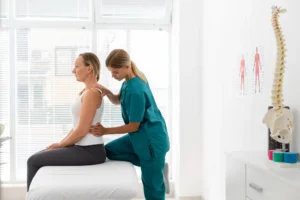
A physiotherapist can assess posture, movement, muscle strength, and mobility before recommending an individualized exercise program.
When Should You Seek Professional Help?
Mild neck discomfort may improve with appropriate self-care, but professional assessment is important when symptoms persist or interfere with everyday activities.
Seek medical or physiotherapy advice if neck pain:
- Continues despite home care
- Frequently returns
- Limits normal movement
- Affects work or daily activities
- Is accompanied by numbness, tingling, or weakness
- Symptoms that move from the neck area toward the shoulder or arm
- Develops after a significant injury
Urgent medical evaluation may be necessary when neck pain occurs with serious symptoms such as significant weakness, loss of coordination, severe headache, fever, or other concerning changes.
FAQ About Managing Neck Pain at Home
How can I relieve neck pain at home?
Gentle movement, regular breaks, improved posture, appropriate heat or cold application, and a comfortable sleeping position may help manage mild neck discomfort.
What are some neck pain home remedies?
Common self-care approaches include gentle stretching, heat or cold packs, maintaining good posture, taking movement breaks, and using a supportive sleeping position.
Can exercises help with neck pain?
Gentle exercises may help improve movement and reduce stiffness for some people. Exercises should be performed slowly and stopped if they cause worsening or unusual symptoms.
How Frequently Should You Move During Desk Work?
If you work at a desk for extended periods, take regular short movement breaks rather than remaining in one position for hours. Adjust your posture and move your neck and shoulders comfortably.
How can I relieve neck pain naturally at home?
If the discomfort is mild, maintaining good posture, staying gently active, using appropriate heat or cold, improving sleep positioning, and performing comfortable exercises may help. Persistent symptoms should be professionally assessed.
When should I see a physiotherapist for neck pain?
Consider consulting a physiotherapist when neck pain persists, repeatedly returns, restricts movement, or affects your daily activities. A physiotherapist can assess your condition and develop an appropriate exercise and rehabilitation plan.
Conclusion
Managing neck discomfort at home starts with understanding possible triggers and making practical changes to posture, movement, sleep, and daily routines. Gentle neck pain exercises at home may support mobility, while regular breaks and better workstation habits can help reduce unnecessary strain. If symptoms persist, worsen, or include neurological warning signs, professional assessment is recommended. An individualized physiotherapy approach can help identify contributing factors and guide safe exercises for long-term management.
Disclaimer
The information provided in this article is intended for general educational purposes only and should not be considered medical advice, diagnosis, or treatment. Everyone’s symptoms and health needs can be different, so the tips and exercises mentioned may not be suitable for every individual.
If neck pain is severe, persistent, worsening, or associated with numbness, weakness, dizziness, or other concerning symptoms, consult a qualified healthcare professional or physiotherapist for an appropriate assessment. Do not delay professional care based solely on information provided in this article.