Back discomfort can affect daily activities, posture, sleep, and overall mobility. Exercises for Back Pain can be a useful part of a well-planned movement routine when they are selected according to an individual’s needs and physical ability. Gentle stretching, controlled strengthening, and mobility exercises may help improve flexibility, support the muscles around the spine, and make everyday movement more comfortable. However, the right exercises depend on the cause and severity of the symptoms.
Exercises for Back Pain and Their Benefits
Regular movement can help maintain flexibility and strength in the muscles that support the spine. Staying active may also reduce stiffness caused by prolonged sitting or inactivity. A suitable exercise routine can focus on improving core stability, hip mobility, posture, and overall body control.
Exercise should generally be introduced gradually. Performing movements with proper technique is more important than completing a large number of repetitions. If an exercise causes sharp, worsening, or unusual discomfort, it should be stopped and assessed by a qualified professional.
Gentle Exercises for Back Pain
Gentle movements are often a practical starting point for people who experience stiffness or reduced mobility. These exercises should be performed slowly without forcing the body into uncomfortable positions.
Knee-to-chest stretch: Lie comfortably on your back and gently bring one knee toward your chest while keeping the other leg relaxed. Hold briefly and change sides. This movement can help gently stretch the lower back and surrounding muscles.
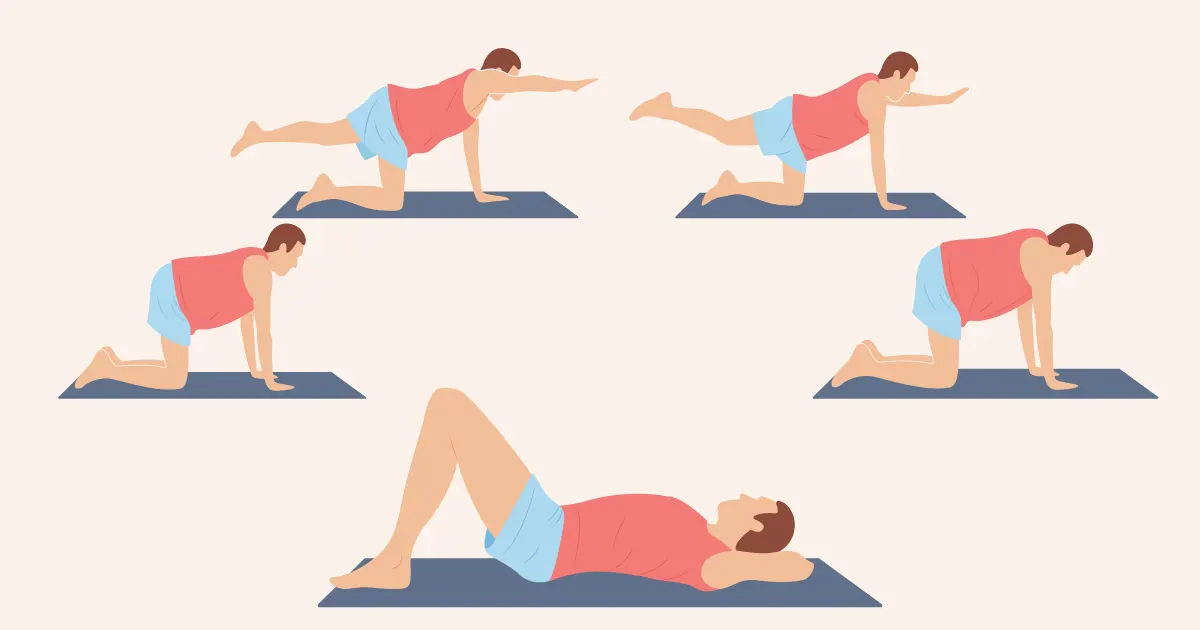
Pelvic Tilts: Lie comfortably on your back with your knees bent and your feet resting flat on the floor. Engage your abdominal muscles gently and slowly rotate your pelvis to flatten your lower back against the floor. Hold the position briefly, then relax and return to the starting posture. Repeat the movement in a slow and controlled manner.
Cat-cow movement: Begin on your hands and knees. Slowly round your back upward and then gently move into a more extended position. Keep the movement controlled and avoid forcing your range of motion.

Strengthening Exercises for Back Pain
Strengthening the muscles around the abdomen, hips, and back can provide better support during everyday activities. Building strength gradually can also improve movement control.
Glute bridges: Lie on your back with your knees bent and feet flat. Tighten your abdominal and glute muscles, then lift your hips slowly. Pause briefly before lowering them with control.
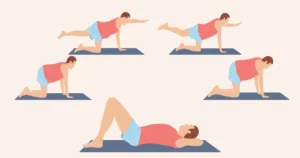
Bird-dog: Start on your hands and knees. Extend one arm and the opposite leg while keeping your torso stable. Hold for a few seconds before returning to the starting position and switching sides.
Modified plank: Begin with a comfortable variation, such as a plank supported on the knees. Keep your body aligned and your abdominal muscles gently engaged. Increase the difficulty gradually as your strength improves.
How to Perform Exercises Safely
The effectiveness of an exercise routine depends not only on the exercises selected but also on how they are performed. Start with a short session and allow your body to adjust before increasing repetitions, duration, or resistance.
Maintain controlled breathing and avoid sudden movements. Good posture and proper alignment can help reduce unnecessary strain. A short warm-up involving gentle walking or mobility movements may also prepare the body for exercise.
When to Modify Exercises for Back Pain
Not every exercise is suitable for everyone. The same movement may feel comfortable for one person but aggravate symptoms in another. If symptoms increase during or after exercise, reduce the intensity or stop the movement.
People recovering from an injury, surgery, or a specific spinal condition should seek professional guidance before beginning a new exercise program. Individual assessment can help identify appropriate movements and progression.
Creating a Consistent Exercise Routine
Consistency is often more useful than exercising intensely for a short period. A balanced routine may include gentle mobility exercises, flexibility work, strengthening movements, and low-impact activities such as walking.
Begin with manageable sessions and gradually increase activity according to your tolerance. Combining regular movement with healthy posture habits and appropriate daily activity can support long-term physical function.
Conclusion
Exercises for Back Pain can support flexibility, muscle strength, mobility, and movement confidence when performed appropriately. Gentle stretches and controlled strengthening exercises can be incorporated into a regular routine, but exercises should always match an individual’s condition and abilities. If back symptoms persist, become severe, or interfere with normal activities, professional assessment is recommended before continuing with an exercise program.
Disclaimer
The information provided in this article is for general educational and informational purposes only and should not be considered medical advice, diagnosis, or treatment. Exercises for back pain may not be suitable for everyone and can vary depending on the underlying cause and individual condition. Consult a qualified healthcare professional before starting a new exercise program, especially if you have an existing condition, recent injury, or persistent symptoms. Stop exercising if you experience increased or unusual discomfort and seek professional guidance when needed.